An enamel mug is a simple object with a surprising number of decisions hidden inside it. Two mugs that look identical in a product photo can differ by a size that changes who wants to carry it, a rim that decides whether the lip chips in a year, and a steel gauge that separates a mug someone keeps for a decade from one that dents in a drawer. The way to get the right one is to start from where the mug will actually be used and work backward to the specification.
Size decides the use before anything else
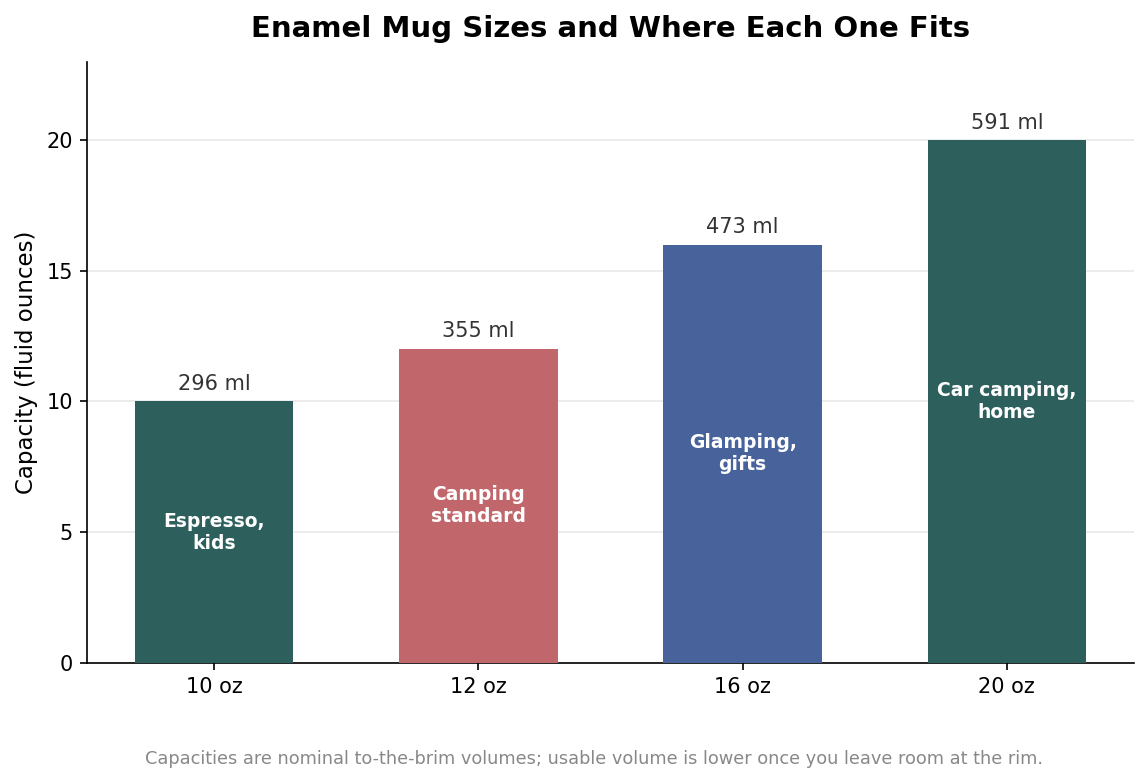
Capacity is the first fork in the road because it quietly sorts the whole market. A 12-ounce mug, roughly 355 milliliters, is the camping standard: it fills once from a small pot, packs densely for shipping, and is the size most outdoor buyers reach for. A 16-ounce mug, about 473 milliliters, reads as a lifestyle or gift item and suits glamping, cafe merchandise, and anything meant to sit on a desk rather than a trail. Ten-ounce mugs work for espresso, kids, and tasting events, while 20-ounce and larger sizes drift into car camping and home decor, where weight and pack size stop mattering. Remember that these are to-the-brim numbers; the comfortable pour is always a little less once you leave room at the lip.
The rim is a durability decision, not a style one
Buyers tend to treat the rim as a color choice, but it is the part of the mug that fails first, so it deserves more thought than the artwork. A rolled rim folds the enamel-coated steel over on itself, and it is the classic camp-mug look. Its weakness is that the fold is the hardest place to coat evenly, and a poorly made rolled rim leaves bare metal at the very edge that meets your mouth, which is exactly where chipping and rust start. A well-made rolled rim solves this with a tighter curve and better frit, and it can be color-matched to a Pantone for a branded color rim. A stainless steel rim takes the opposite approach: it caps the lip with bare, un-enameled stainless that cannot chip because there is no enamel there to chip. It sacrifices the all-over color look for a lip that survives dishwashers and daily knocks. Choose a stainless rim when the mug will be used hard and a color-matched rolled rim when appearance leads and the maker can prove clean edge coverage.
Gauge is the number that separates a keepsake from a giveaway
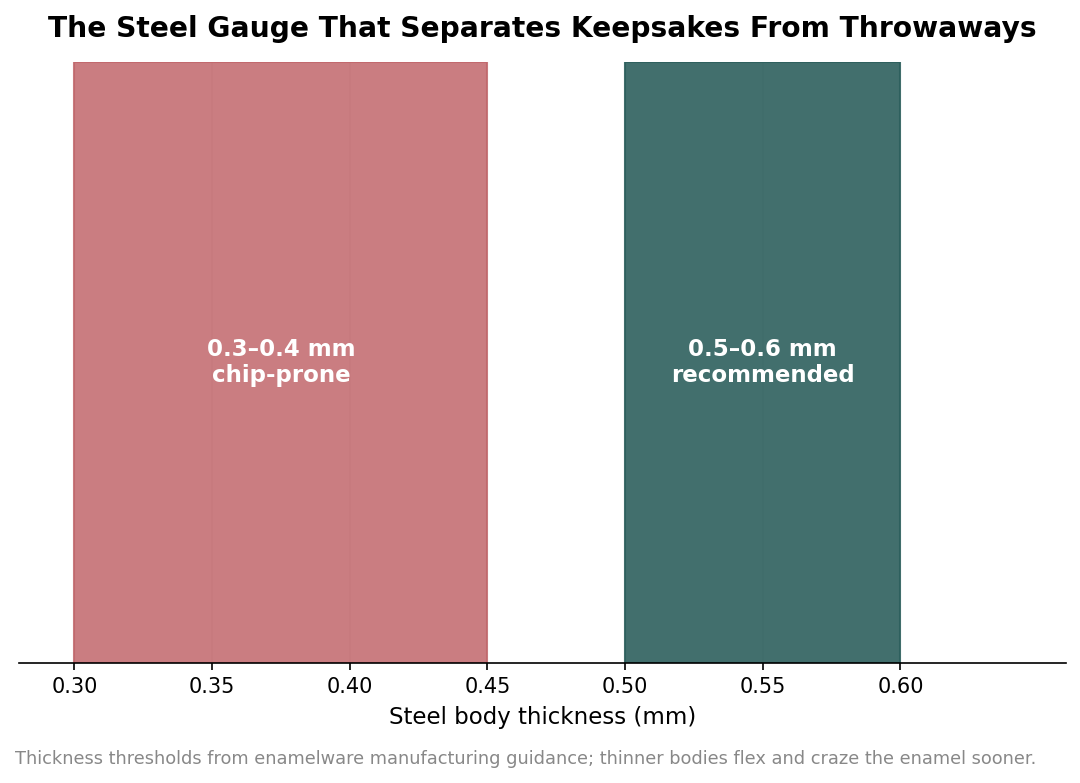
The steel body thickness is the single most reliable predictor of how long an enamel mug lasts, and it is the spec most order forms omit. Enamel is glass fused onto steel, and glass cracks when the metal underneath it flexes. A thin 0.3 to 0.4 millimeter body flexes easily, so the enamel crazes and chips sooner, especially at the rim and base. Manufacturing guidance points to 0.5 to 0.6 millimeter steel as the threshold where the body is stiff enough to protect the enamel through normal use. Heavier gauge costs more and weighs more, which is why giveaway mugs cut it and heirloom mugs do not. If a supplier will not state the gauge in millimeters, treat that silence as a thin-steel answer.
Finish and shape round out the choice
Once size, rim, and gauge are settled, the finish is mostly about the message. A speckled finish, where flecks of a second color are fired over the base coat, reads as heritage and outdoors, and it hides small marks better than a flat solid color. A clean solid color reads as modern and retail, and it shows fine fired-print detail more crisply. A handleless tumbler drops the handle for a stackable, packable cup that suits tasting flights, cocktail service, and tight camp kits, at the cost of being hot to hold with a full pour of coffee. None of these finishes changes durability much on their own; they change who the mug appeals to, which is the point of a branded piece.
Heat is the one performance trait buyers underestimate. Enamel over steel conducts heat readily, so a mug filled with a fresh pour gets hot at the wall and hotter at the rim, and a thin-gauge body heats and cools faster than a heavy one. That is a genuine advantage on a cold morning, when you want the mug to warm your hands, and a nuisance at a tasting table, where a handleless tumbler of hot coffee is hard to pick up. The same conductivity means enamelware is not made for a microwave, since the steel core is metal, and while most enamel mugs tolerate a dishwasher, a rolled rim with any exposed metal will rust there before an all-stainless lip will. Factor the serving temperature and the washing routine into the style choice, not just the look.
Matching the mug to the job
For a campground, outfitter, or outdoor brand, the answer is usually a 12-ounce, 0.5 to 0.6 millimeter, stainless-rim mug in a speckled finish: it packs cheaply, survives the use, and looks the part. For cafe or retail merchandise that customers pay for, a 16-ounce mug with a color-matched rolled rim and a crisp fired print earns its shelf price on looks and hand-feel. For weddings and events, where the mug is a favor that photographs well and gets used a few times, a lighter rolled-rim mug in a custom color is a reasonable place to save. For corporate gifting, spend on gauge and a stainless rim, because a mug that chips within a quarter does the brand more harm than no mug at all. In every case the sequence is the same: pick the use, let it set the size, then buy the rim and the gauge that will survive it. The finish is the last and most forgiving decision, not the first.