Enamel camp mugs have a specific look and a specific feel, and both come from what they are: a steel core dipped in glass-based porcelain enamel, usually finished with a rolled stainless steel rim. Before you commit a branded order to enamel, it helps to know honestly how it compares with the two mugs it competes against on a merch table — ceramic stoneware and double-wall stainless. Each wins at something different, and matching the mug to how it will actually be used saves you from a warehouse of the wrong drinkware.
What enamel is good at
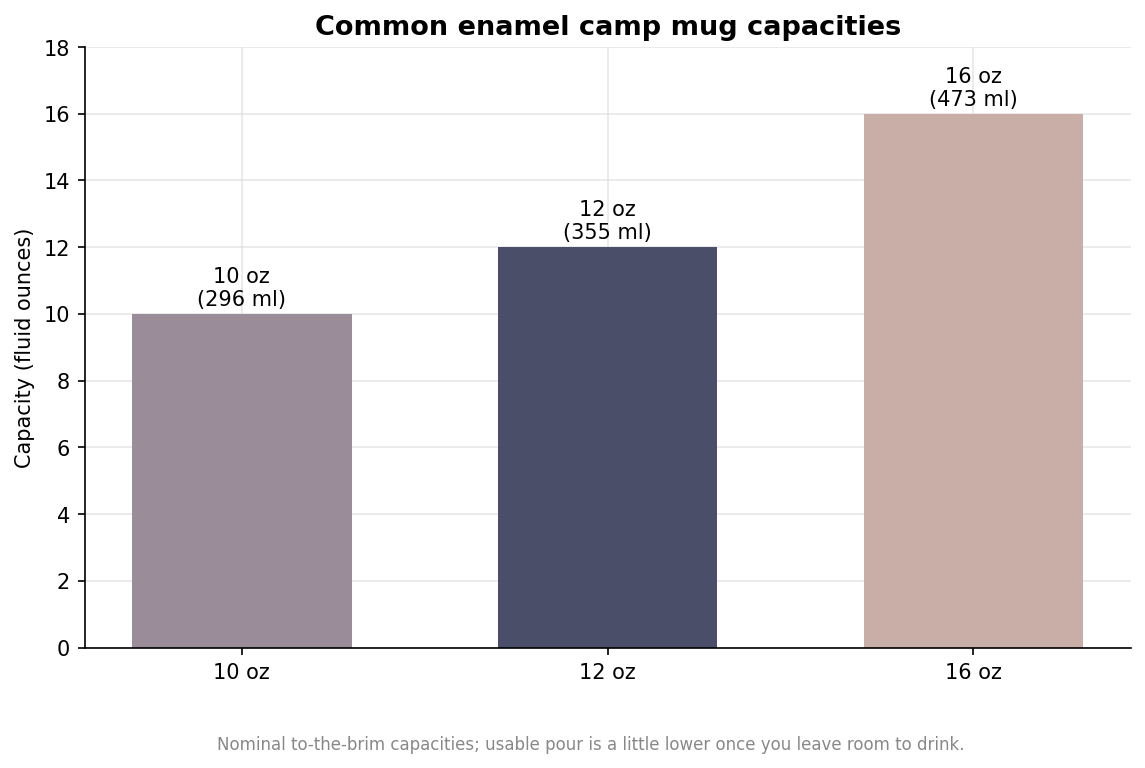
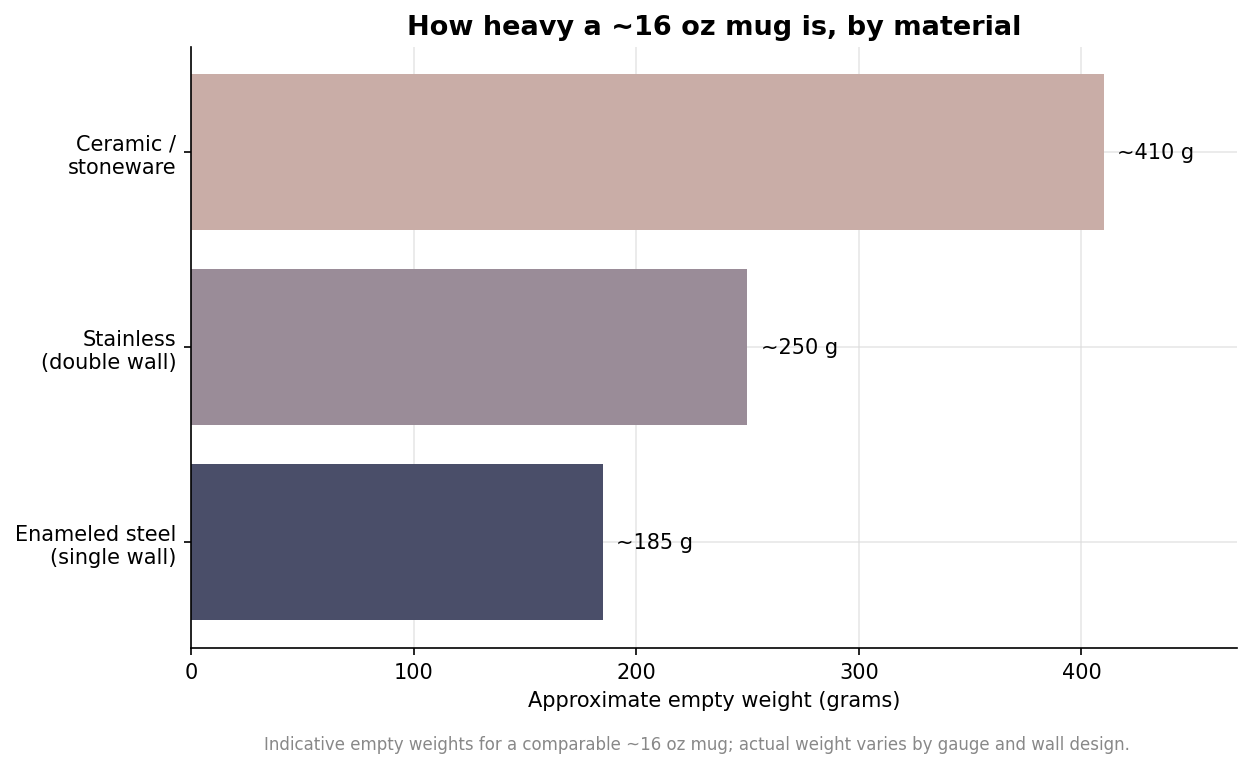
Enamel’s strengths are weight, ruggedness, and character. A steel-cored enamel mug is light — an empty 16-ounce mug lands somewhere around 180 grams, well under a comparable ceramic — so it ships cheaply and travels well in a backpack or a gift box. It will not shatter if it is dropped on concrete the way stoneware does; instead it dents or, over time, chips at the rim. And the aesthetic is the whole point: the speckled, vintage camp look is instantly recognizable and photographs well, which is why it dominates outdoor, coffee-roaster, and lifestyle-brand merch. Standard capacities are 10, 12, and 16 ounces, with 12 and 16 the workhorses; the chart below shows how those translate to millilitres.
Where enamel costs you something
The honest trade-off is heat. A classic enamel mug is single-walled, so it does not insulate — the body gets hot to hold with a fresh pour and the drink cools faster than it would in a double-wall vessel. The stainless rim also conducts heat, which some drinkers notice on the lip. If your use case is a long desk coffee or a hot drink someone nurses for an hour, double-wall stainless is the better tool: it keeps the drink warm and stays comfortable in the hand. And enamel is not indestructible — the glass coating can chip if the mug is knocked hard, exposing the steel to eventual rust at that spot. That is normal for the material, not a defect, but it is worth setting expectations with recipients. The weight difference across materials is real enough to matter for shipping a large order, as the second chart shows.
How it stacks up against ceramic and stainless
Think of the three as different jobs. Ceramic stoneware is the heaviest and most breakable but feels the most premium on a cafe counter and holds heat moderately well, making it the choice for retail mugs meant to live on a shelf or a desk. Double-wall stainless is the performance option: insulated, near-indestructible, and comfortable with any temperature, but pricier per unit and without the handcrafted look. Enamel sits in the middle as the rugged, lightweight, character-forward pick — ideal for events, outdoor brands, camp stores, and giveaways where the look and the durability-to-weight ratio matter more than keeping coffee hot. None of them is “best”; the right answer is dictated by whether your buyer values appearance, insulation, or unbreakability.
Care and the questions buyers actually ask
Two practical questions come up on almost every enamel order: can it go in the dishwasher, and can it go on a flame? On washing, a fired-on enamel finish tolerates dishwashing well, but the more decoration relies on a lower-temperature printed layer, the more hand-washing extends its life; if the mugs are headed to a busy cafe or a campground, spec a fired design and tell recipients they can run them through a machine. On heat, traditional enameled steel can technically take direct flame or a campfire, which is part of its outdoor appeal, but the stainless-rimmed promotional versions are best treated as drinkware rather than cookware, and none of them belong in a microwave because of the steel core. Setting those two expectations up front prevents the most common complaints and the “my mug rusted” emails that really trace back to a chip left unwashed.
Speccing an enamel order so it lasts
If enamel is the right fit, a few specifics protect the order. Ask about the steel gauge — a heavier gauge resists denting and feels more substantial in the hand — and confirm the rim is stainless rather than enamel-coated, because a bare enamel rim is where chipping starts. For decoration, remember that a fired-on design bonds into the enamel and survives dishwashing, while a lower-temperature printed or transfer logo can grey or wear over time, so match the method to how the mug will be washed. Keep artwork clear of the rim and handle, and request a pre-production sample on the actual mug before a big run, since enamel colors shift from what you see on screen. Get the gauge, the rim, and the decoration method right, and an enamel mug does exactly what it is meant to do: look the part, take a beating, and keep a brand in someone’s hand trip after trip.