Enamel mugs sit in an odd spot. They look like rugged, throw-them-in-a-pack camp gear, yet they carry a coating that is closer to glass than to metal. That combination is exactly why the safety questions come up so often: people want to know whether they can microwave one, run it through the dishwasher, set it on a camp stove, or trust it with a child’s hot chocolate. The short answers are mostly reassuring, but the reasons behind them are worth understanding before you order a batch with your logo on the side.
This guide walks through the four questions that actually decide whether an enamel mug is safe for the way you plan to use it: heat, the microwave, the dishwasher, and what the metals in the coating are allowed to do. None of it requires a chemistry background, and all of it is easy to check with a supplier before you commit.
The microwave is the one hard no
Keep enamel mugs out of the microwave, without exception. An enamel mug is a steel body with a fused glass coating on both faces. The steel is what makes it durable and campfire-ready, and it is also what makes a microwave a genuine hazard. Metal reflects microwaves rather than absorbing them, and thin or chipped edges can concentrate the field enough to arc, spark, and damage the oven, or worse. This is not a cautious manufacturer covering itself; it is the same reason you do not put a fork in a microwave. If your use case involves reheating drinks at a desk, an enamel mug is the wrong tool, and no coating quality changes that.
The flip side is that the steel core is a real advantage everywhere else heat is involved, which is where most of the confusion starts.
Heat, hot drinks, and open flame
Enamel is formed by firing powdered glass onto steel at roughly 750 to 850 degrees Celsius, or about 1,380 to 1,560 Fahrenheit. That single fact answers most heat questions at once: nothing you do at a campsite or a kitchen counter comes close to the temperature that created the coating in the first place. Boiling coffee, a dishwasher cycle, a hot oven, even a wood fire all sit well below the forming temperature, which is why a well-made enamel mug can go straight onto a camp stove or into the coals to boil water.
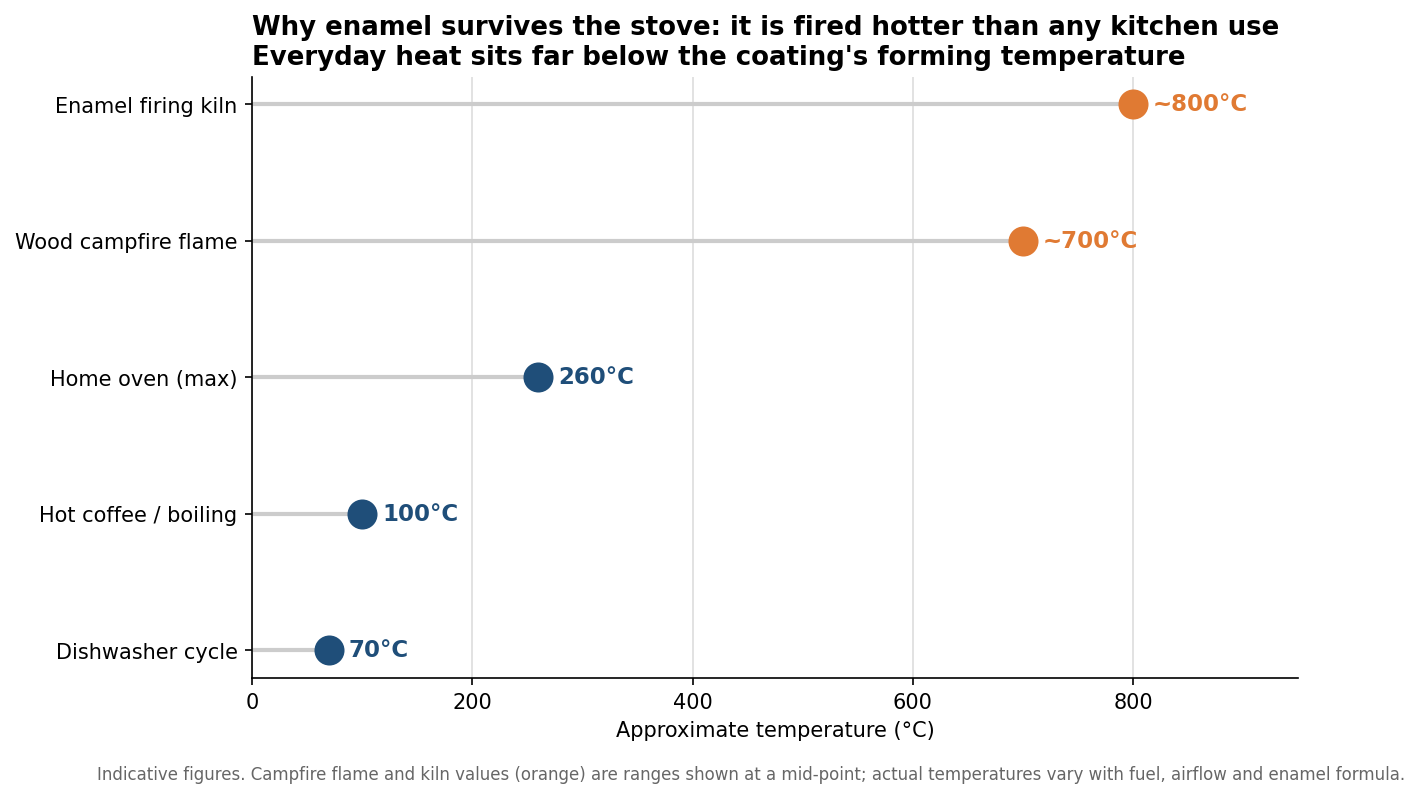
The practical caveats are about handling rather than the coating failing. Steel conducts heat quickly, so a mug heated on a flame gets hot all over, including the rim and handle, far faster than a ceramic mug would. Expect to need a cloth or glove. The other real risk is thermal shock at the extremes: pouring boiling liquid into a mug straight from a freezer, or plunging a fire-hot mug into cold water, stresses the coating and can start a crack. Let a mug come back toward room temperature before you wash it. Treated sensibly, the heat tolerance is one of the format’s genuine strengths, not a liability.
Dishwashers and everyday wear
Enamel mugs are dishwasher safe, with a caveat about appearance rather than safety. The fused-glass surface is non-porous and shrugs off detergent and hot water. What dulls an enamel mug over time is mechanical: abrasive powders, scouring pads, and mugs knocking against each other or the rack. Fired glass is hard but brittle, so a sharp impact against another item is the most common way a rim chips. If you are buying mugs for a cafe or a rental fleet that will see daily machine washing, that is worth designing around, either by spacing them in the rack or accepting that heavy commercial use will show cosmetic wear at the rim first.
Hand washing with a soft sponge is gentler and keeps a printed rim or logo looking sharper for longer, but it is a preference, not a requirement. Once a chip does happen, the exposed steel can develop a spot of surface rust; keeping mugs dry between uses slows that considerably.
Lead, cadmium, and what “food safe” means
This is the question that deserves the most care, because the honest answer is that it depends on how the mug was made, not on the fact that it is enamel. Enamel itself is inert fired glass, and a properly formulated coating leaches essentially nothing. The historical concern is with lead and cadmium, which were once used in glazes and colorants and can migrate into acidic drinks like coffee if a coating is poorly made or heavily decorated with the wrong pigments.
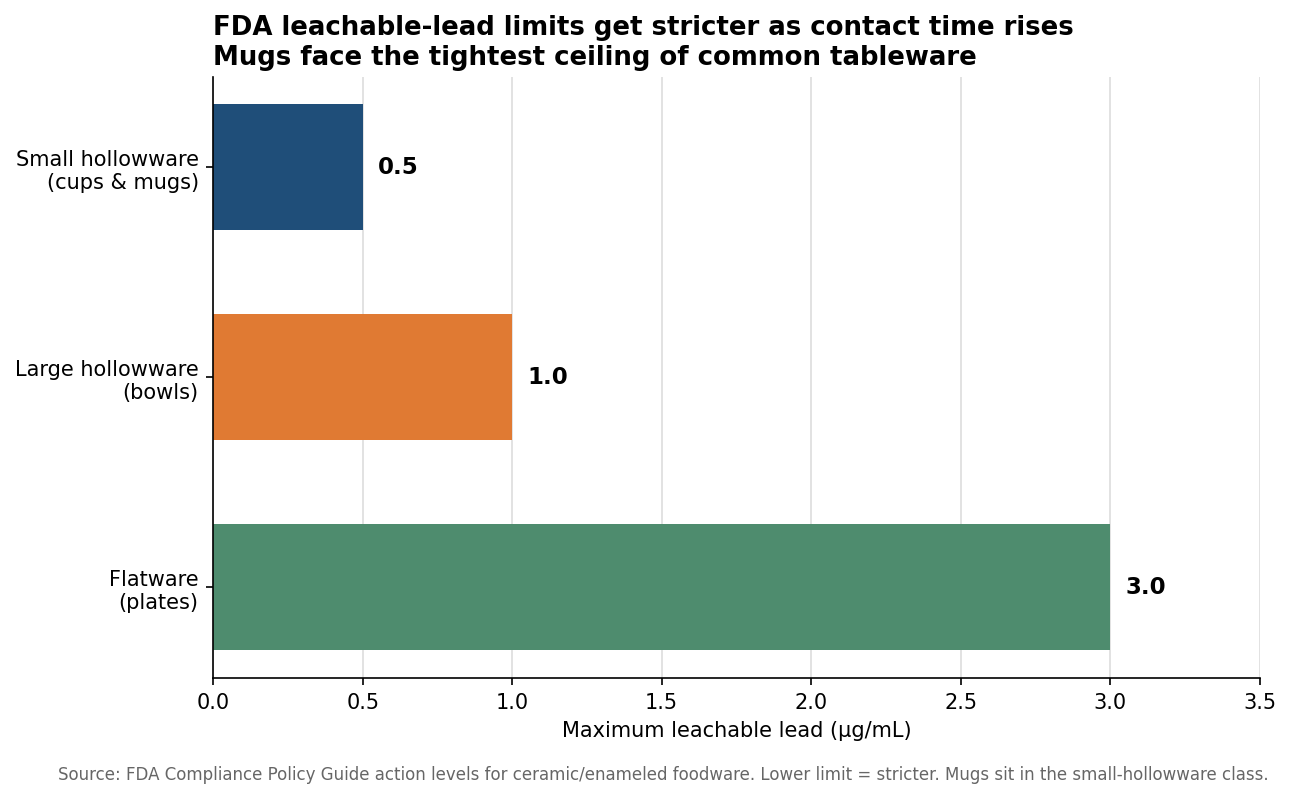
In the United States, the FDA sets action levels for how much lead a piece of foodware may leach in a standardized acid soak, and the limit tightens as the food-contact time gets longer. Mugs and cups fall into the small-hollowware class, which carries the strictest of the common ceilings.
Cadmium is regulated separately and tends to matter most in bright red, orange, and yellow decoration, which is exactly the sort of eye-catching interior color a branded mug might use. The takeaway is not to avoid color; it is to buy from a supplier who can confirm the mug meets FDA limits and is made without added lead or cadmium, and to be a little more diligent when the design calls for vivid glazes on the drinking surface. In California, Proposition 65 adds a separate warning requirement, so reputable suppliers to that market can usually speak to it directly. Ask for the compliance statement in writing; a manufacturer that makes food-contact enamel will have one ready.
Specifying a mug that stays safe and looks right
Most of the safety story comes down to buying a genuinely well-made mug and then using it as intended, so it pays to specify a few things up front. Confirm the food-contact compliance first, ideally a plain statement that the mug meets FDA leachable-metal limits and is lead- and cadmium-free on the drinking surface. Match the decoration method to the wear you expect: a fired-on design becomes part of the glass and survives dishwashers and campfires, while a lower-temperature printed or transfer decoration can look excellent but is more vulnerable at the rim and under abrasion. Think about where the color goes, keeping the most saturated pigments away from the lip and interior if you want the simplest compliance path.
Handled this way, an enamel mug is one of the safer and more durable drinkware formats you can put a brand on. Keep it out of the microwave, let it cool before washing, treat the rim as the vulnerable edge it is, and buy from someone who can show you the compliance paperwork. Do those four things and the coating that makes these mugs look fragile turns out to be the reason they last.